How to Track Macros Without Weighing Your Food
A food scale is the most accurate way to measure what you eat, and most people quit using one within a few weeks. The good news: you rarely need it. This guide covers how to track macros without weighing food, from hand portions to photo logging, plus the few situations where a scale genuinely earns its counter space.
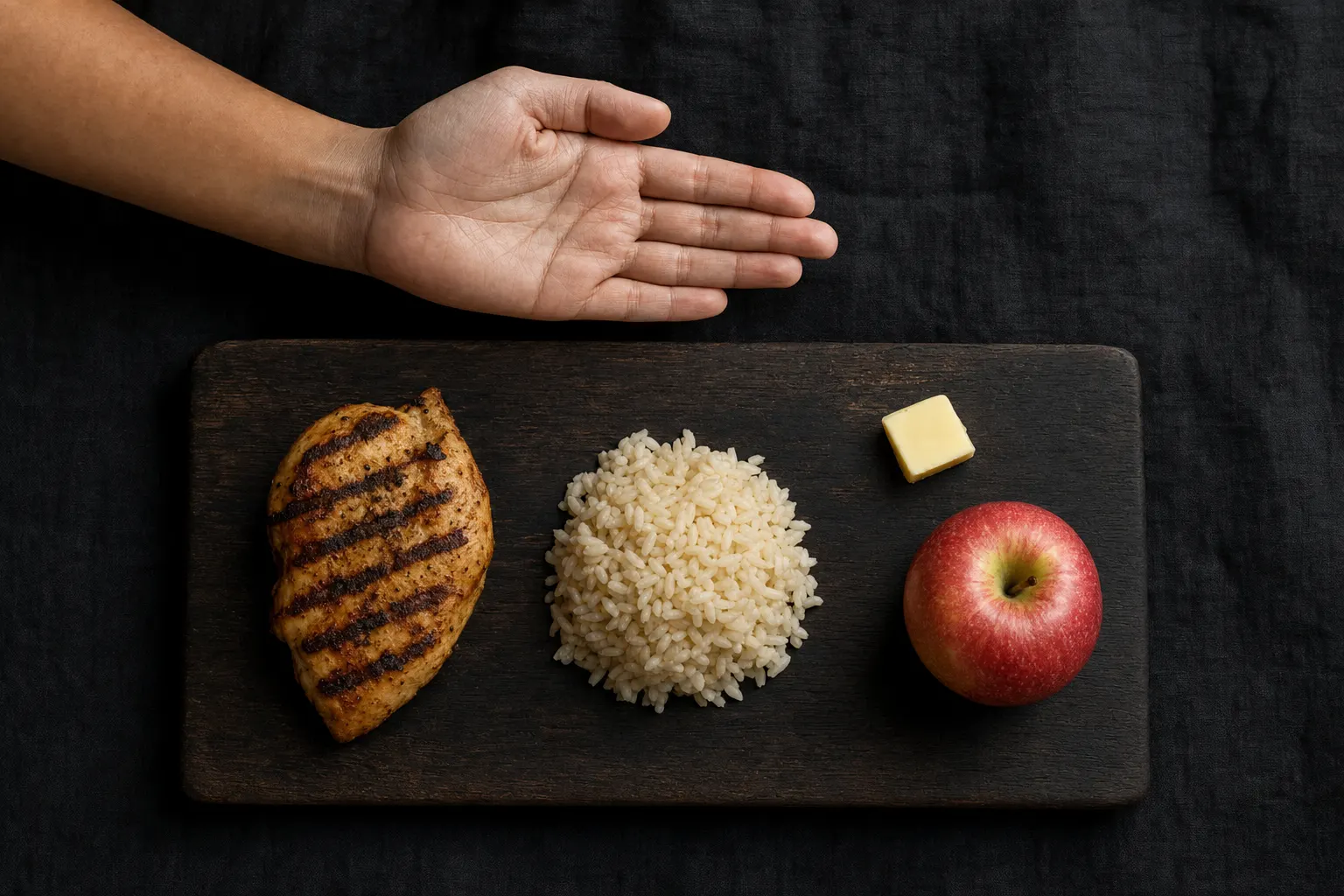
Short answer: You can track macros without weighing food by using the hand-portion method (a palm of protein, a cupped hand of carbs, a thumb of fat, a fist of vegetables) or by photo-logging meals with an app that estimates calories and macros for you. Either way you give up some precision, but for fat loss, muscle gain, or maintenance at normal rates, consistency matters far more than gram-level accuracy. A scale is only clearly worth it in edge cases like contest prep or grinding out the last few pounds of a cut.
How to track macros without weighing food: why it works
The case against obsessive weighing is simple: measurement error is not what sinks most people. Adherence is. A classic New England Journal of Medicine study found that dieters who believed they could not lose weight underreported their actual intake by an average of 47 percent, and broader validation research puts typical self-report underreporting anywhere from 10 to 50 percent. People were not failing because their scale was off by three grams. They were failing because whole snacks, cooking oil, and weekend meals never got logged at all.
That is why 80 percent consistency for six months beats 100 percent precision for two weeks. A tracking method you will actually use every day, even a rougher one, gives you a stable baseline. Once your logged intake is consistent, you can adjust it against real-world results: if the scale trend and progress photos stall for two to three weeks, drop portions slightly. That feedback loop works whether your log is perfect or merely honest.
The hand-portion method: palm, fist, cupped hand, thumb
The most popular scale-free system comes from Precision Nutrition. Your hand scales roughly with your body size, and it is always with you:
- Protein: one palm-sized portion (chicken, fish, tofu, Greek yogurt)
- Vegetables: one fist
- Carbs: one cupped hand (rice, oats, potatoes, fruit)
- Fats: one thumb (oils, nut butter, cheese, avocado)
Precision Nutrition's daily starting framework is about 6 to 8 of each portion type for moderately active men and 4 to 6 for moderately active women, adjusted up or down based on results. They estimate the system gets you roughly 95 percent of the accuracy of weighing and measuring, with a fraction of the friction.
The trade-offs are real, though. Hand portions handle whole foods well but struggle with mixed dishes, restaurant meals cooked with unknown amounts of oil, and calorie-dense extras like dressings and sauces. Those blind spots are exactly where most untracked calories hide.
When weighing food is actually worth it
Honest answer: sometimes a scale is the right tool. Weighing earns its keep when the margin for error is smaller than the error of estimating:
- Contest prep or photoshoot conditioning. At very low body fat, a 150-calorie daily miss can stall progress for weeks.
- The last 5 to 10 pounds of a cut. Small deficits (200 to 300 calories) can be fully erased by eyeballing errors on oil, rice, and nut butter alone.
- Calibration stints. Weighing your usual foods for one or two weeks, once, trains your eye. Most people discover their "tablespoon" of peanut butter is two and a half.
- Calorie-dense foods specifically. Even committed non-weighers benefit from measuring oils and spreads, where a small visual error costs 100-plus calories.
If none of those describe you, the scale is optional. If one does, use it temporarily and deliberately rather than as a permanent lifestyle.
Photo logging: the middle path between eyeballing and weighing
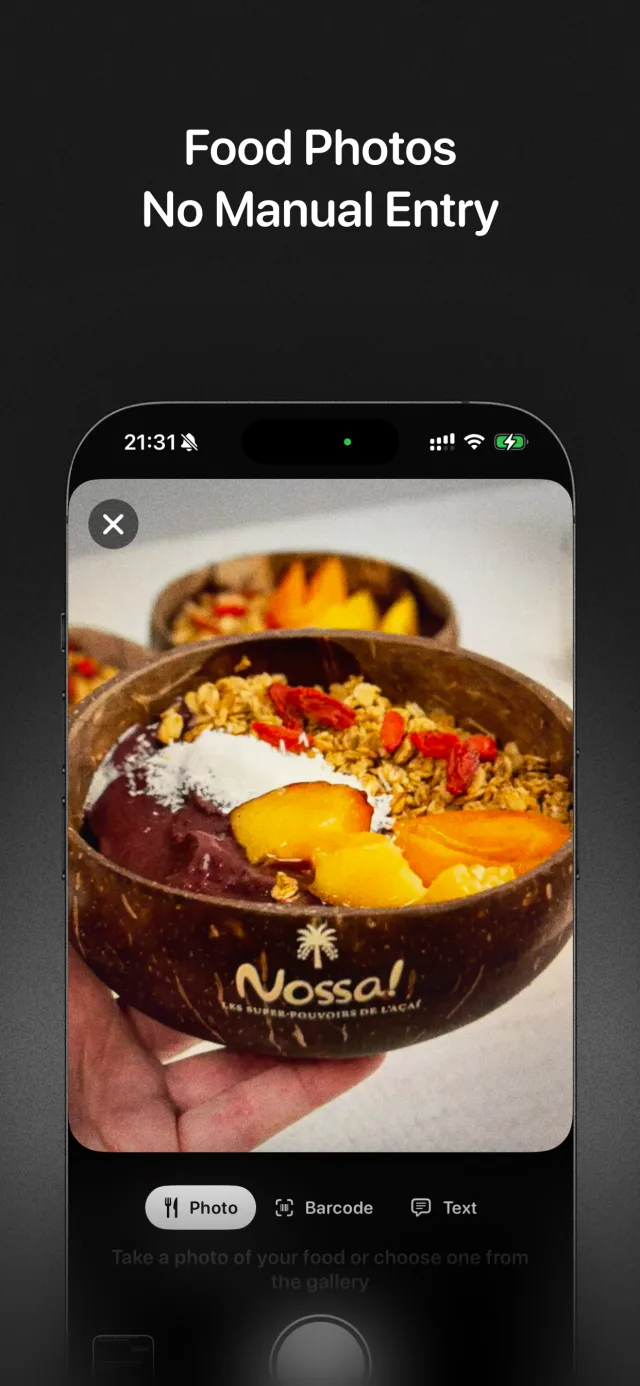
There is now a third option between hand portions and gram-weighing: point your camera at the plate. With ego, you snap a photo of your meal and the app returns calories plus protein, carbs, and fat, which you can edit before saving. It is more accurate than pure eyeballing because the estimate is not skewed by your hunger or optimism, and it removes the two biggest sources of tracking failure: forgetting to log and giving up on database searches.
AI estimates are not perfect, and you should treat them as good estimates rather than lab measurements. We break down what affects them in our guide to how accurate AI calorie counters are, and how the photo flow works in take a picture of food, get calories. For packaged foods, ego's barcode scanner pulls exact label data, so you only rely on estimation for cooked and restaurant meals. If you are coming from apps built around weighing and manual database entry, see our MyFitnessPal alternative comparison.
Tracking macros for muscle gain without a scale
Muscle gain is actually the most forgiving goal for scale-free tracking. You need three things: enough protein, a modest calorie surplus, and progressive overload in the gym. None of them require gram precision.
- Protein: hit a palm-sized portion at each meal, roughly 4 or more palms per day depending on your size. Photo logging makes it easy to confirm you are landing in range.
- Surplus: if your weight trend is flat over two to three weeks, add a cupped hand of carbs or a thumb of fat per day. If you are gaining faster than about half a pound to a pound per week, pull back.
- Training: the surplus only builds muscle if training drives it. ego pairs your nutrition targets with an AI-built strength plan and suggests working weights per exercise, so the eating and lifting sides stay connected.
How to track macros without weighing food using ego
- Download ego and set your goal
Get ego on the App Store (iPhone, iOS 18+, free to download). Tell it your goal: fat loss, muscle gain, or maintenance, plus your experience and activity level. ego sets daily calorie and macro targets for you, so you never have to compute them by hand.
- Snap a photo of each meal
Point your camera at the plate before you eat. ego estimates total calories and the protein, carb, and fat breakdown. No scale, no measuring cups, no searching a database for "chicken breast, grilled, 6 oz."
- Edit anything that looks off
Every photo log is editable. If you know the kitchen was heavy-handed with oil or your portion was bigger than it looks, nudge the numbers up. Thirty seconds of correction beats five minutes of weighing.
- Scan barcodes for packaged food
For anything with a label, use the barcode scanner instead of the camera estimate. Packaged foods are the one place exact data is free, so take it.
- Type meals into chat when a photo is impractical
Ate half a sandwich in the car? Tell the Ego Agent in chat, "turkey sandwich, half, plus a small coffee with milk," and it logs the meal for you.
- Check your daily nutrition analysis
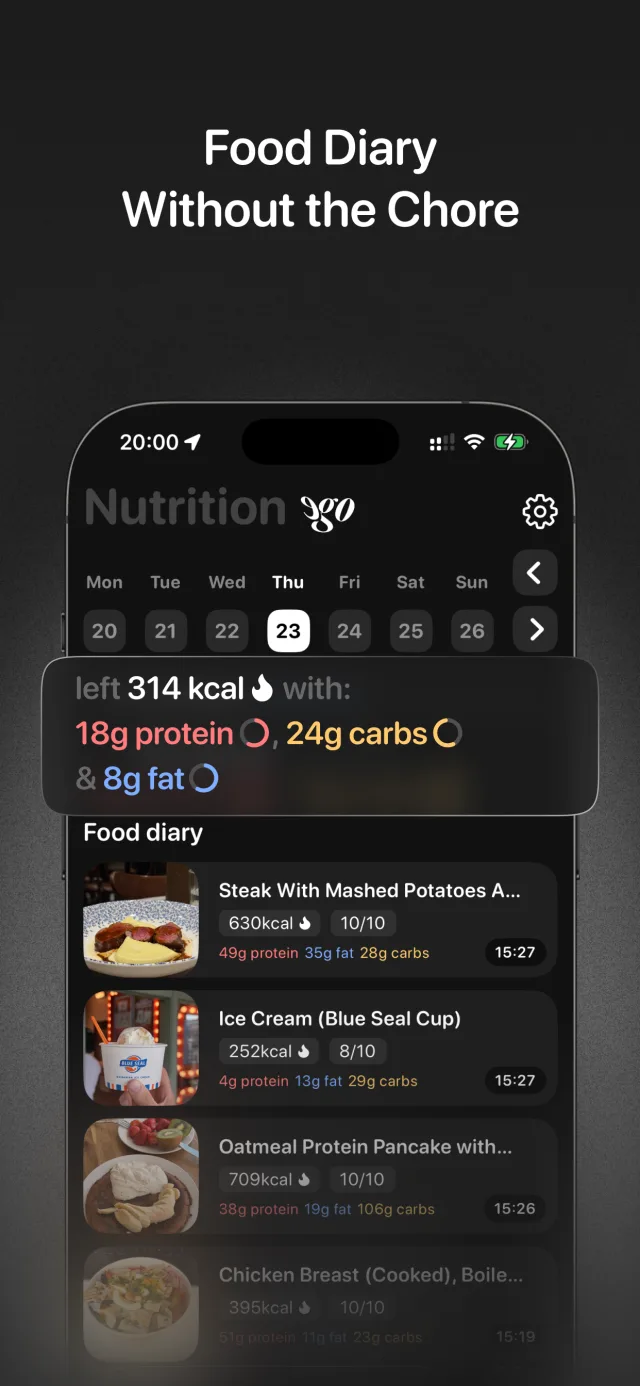
ego reviews your day and flags what is blocking your goal, like protein consistently landing short at breakfast. Your targets update daily, so course corrections happen in days, not months.
Frequently asked questions
How accurate is the hand-portion method compared to weighing food?
Can I build muscle without weighing my food?
What is the easiest way to track calories without logging everything manually?
Do I ever need a food scale if I use a photo-logging app?
Ditch the food scale, keep the results
ego turns a photo of your plate into editable calories and macros, sets daily targets from your goal, and adapts your training plan when life gets in the way. Free to download on iPhone.